A modular cleanroom is a controlled-environment room built from prefabricated wall panels, ceilings, doors, windows, lighting, and HVAC or filtration components. Unlike a conventional cleanroom constructed mainly on-site, a Modular Cleanroom System can be assembled, reconfigured, expanded, or relocated with less disruption. For pharmaceutical, semiconductor, medical-device, biotechnology, food, and precision-manufacturing businesses, this approach can shorten project schedules, improve contamination control, and reduce long-term facility costs.
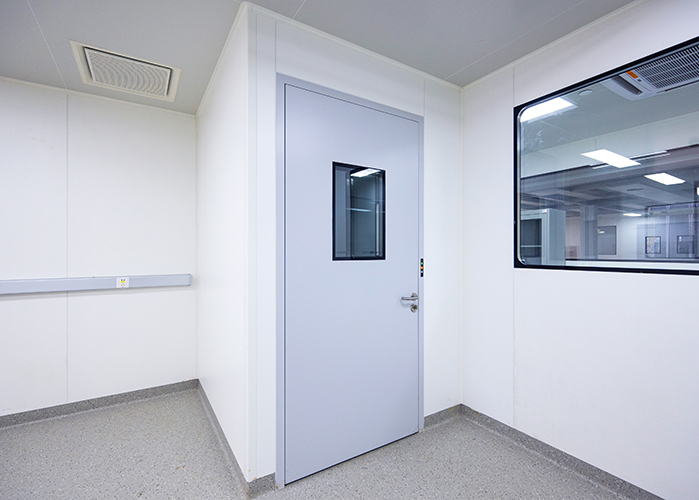
A modular cleanroom is an engineered enclosure designed to control airborne particles, microorganisms, temperature, humidity, pressure differentials, and personnel or material flow.
Its main components commonly include:
● Sandwich cleanroom wall and ceiling panels
● Flush-mounted doors and observation windows
● Coving systems and sealed junctions
● HEPA or ULPA filtration units
● Air-return systems and pressure-control equipment
● Cleanroom lighting and electrical services
● Pass boxes, air showers, and material-transfer equipment
● Monitoring systems for particles, temperature, humidity, and differential pressure
The term modular refers to the standardized panel-based construction method. Panels are manufactured to defined dimensions and joined using mechanical profiles, cam locks, silicone seals, or other cleanroom-compatible connection systems.
The result is a controlled space that can be installed faster than a traditional masonry cleanroom while supporting future changes in production capacity.
A modular cleanroom protects the process by controlling four key factors:
The required performance is normally defined under ISO 14644-1, which classifies cleanrooms according to airborne particle concentration. Validation and routine monitoring are addressed through ISO 14644-2.
For a business, the value of a modular cleanroom extends beyond the room itself. The system influences production speed, regulatory readiness, maintenance cost, and the ability to respond to market demand.
Prefabricated panels can be manufactured while the site is being prepared. This parallel workflow may reduce the time between design approval and operational use.
A well-managed project typically follows this sequence:
This process reduces wet construction and makes the installation more predictable.
A modular cleanroom can be extended by adding compatible panels and services. Internal partitions can also be moved when production lines change.
This is particularly useful for businesses that:
● Add new filling or packaging equipment
● Increase production capacity
● Introduce a new product line
● Need a higher ISO classification in one area
● Convert part of a warehouse into a controlled environment
Cleanroom panels are designed with smooth, easy-to-clean surfaces. Properly selected panels should resist moisture, disinfectants, abrasion, and routine chemical exposure.
Important design details include:
● Flush panel joints
● Minimal ledges
● Rounded coving at wall-to-floor intersections
● Sealed penetrations
● Non-shedding finishes
● Corrosion-resistant hardware
A qualified Clean Room Panel Supplier should provide information about surface durability, fire performance, thermal behavior, and chemical resistance rather than only quoting the panel price.
Factory production allows dimensional checks before delivery. For high-precision applications, panel manufacturing may be controlled to tight dimensional tolerances for specified components or machining operations, although the exact tolerance must be confirmed in the supplier's drawings and quality plan.
A responsible Clean Room Panel Supplier should also define inspection procedures, which may include:
● Incoming raw-material inspection
● Core-density verification
● Panel thickness measurement
● Surface-finish inspection
● Joint and cam-lock inspection
● Dimensional checks
● Packaging inspection
● Final documentation review
For critical projects, buyers may request 100% inspection of visible surfaces, dimensions, or finished panels rather than relying only on sampling.
The panel is the basic building block of the enclosure — whether a steel-faced sandwich panel or a corrosion-resistant Fiber Glass Panel, its construction should match the process risk, cleaning regime, fire requirements, and thermal conditions.
| Panel consideration | Common options | Why it matters |
|---|---|---|
| Facing material | Pre-painted steel, galvanized steel, stainless steel, aluminum | Determines corrosion resistance, cleanability, and appearance |
| Core material | EPS, rock wool, PIR, PU, honeycomb, calcium silicate | Influences insulation, fire behavior, weight, and acoustic performance |
| Surface finish | Smooth coated steel, HPL, stainless steel, PVC-coated finish | Affects chemical resistance and cleaning performance |
| Joint design | Cam-lock, tongue-and-groove, mechanical profile | Influences airtightness, installation speed, and maintenance |
| Thickness | Commonly 50–150 mm, project dependent | Affects structural stability and thermal insulation |
| Service integration | Concealed utilities, flush sockets, panel penetrations | Reduces contamination traps and simplifies operation |
Fire performance should be evaluated using the requirements applicable to the project location. Depending on the market, documentation may reference ASTM E84, EN 13501-1, or DIN 4102. Thermal insulation may be evaluated using methods such as ASTM C518, while dimensional and material requirements should be confirmed in the project specification.
These standards do not automatically mean that every panel meets every requirement. The buyer should request current test reports for the exact panel construction, facing, core, and thickness being offered.
When evaluating the Easywall Modular Cleanroom System, begin with the process rather than the panel catalogue. Define what the room must protect, what contaminants are present, and how people, products, waste, and equipment will move.
Prepare the following information:
● Required ISO classification
● Room dimensions and ceiling height
● Temperature and humidity range
● Positive or negative pressure requirements
● Cleaning agents and disinfection methods
● Fire and building-code requirements
● Equipment loads and ceiling service requirements
● Door, pass-box, and air-shower locations
● Utility and cable-tray routes
● Validation and documentation requirements
Then ask Easywall or another qualified cleanroom panel manufacturer to provide a coordinated proposal. The proposal should clearly separate the cleanroom enclosure from HVAC, filtration, electrical, controls, installation, testing, and validation scopes.
A modular cleanroom is a prefabricated, controlled-environment enclosure that combines cleanroom panels with filtration, airflow management, pressure control, and validated operating procedures. Its main business advantages are faster deployment, easier expansion, improved maintainability, and more consistent construction quality.
The most important points are:
● A Modular Cleanroom System is more than a set of wall panels.
● ISO 14644-1 and ISO 14644-2 are central references for particle classification and monitoring.
● ASTM, DIN, and EN fire or material tests should relate to the exact panel construction.
● A qualified Clean Room Panel Supplier must provide technical data, inspection evidence, and installation support.
● Modular construction does not replace commissioning, validation, cleaning controls, or GMP procedures.
● Easywall can be evaluated as part of a complete project solution based on the required classification, materials, documentation, and lifecycle needs.
Request drawings, samples, test reports, inspection records, and a clear installation and validation plan before approving the final Clean Room Panel Supplier. You can also contact Easywall's engineering team directly to start this comparison process.
Latest News
What to Ask Before Buying Cleanroom Panels?
 Sep. 17, 2026
The Ultimate Cleanroom Wall Panel Guide: Materials, Cores, and Coatings
Sep. 15, 2026 
What Makes a Cleanroom Panel GMP-Friendly?
Sep. 14, 2026 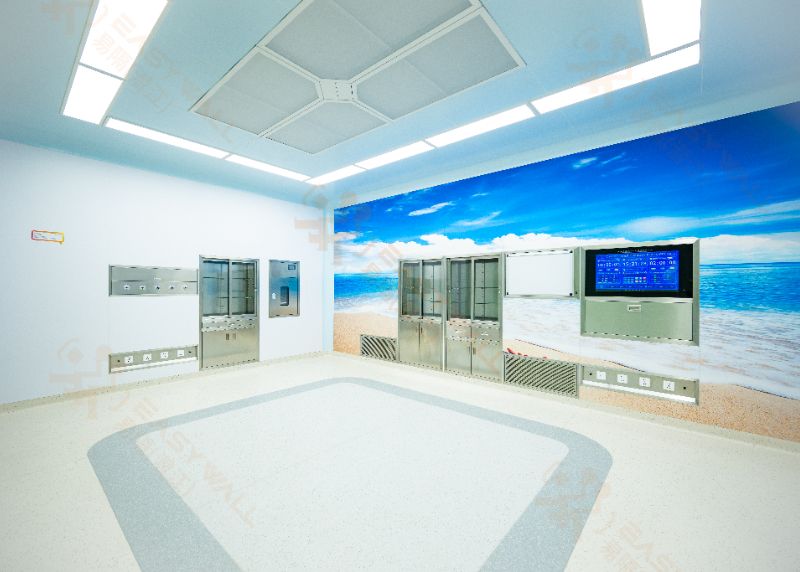
Why Cleanroom Wall Systems Matter?
Sep. 11, 2026 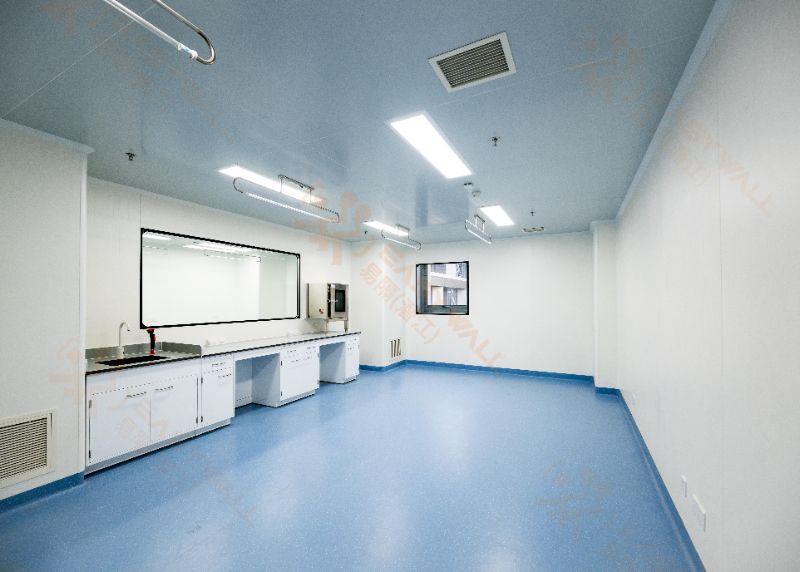
CGMP Compliance Checklist for Pharmaceutical Wall Panel Selection
Sep. 09, 2026 Our Location
No.168, Ziguang Road, Qianjiang, Hubei, P.R.China
Quick Contact
aria@easywalltec.com leo@easywalltec.comWe will get back to you within 24 hours, or call us everyday 09:00Am - 12:00Pm
+86 139 6255 5162
Request A Quote
Technological innovation, product quality is the soul of the enterprise, market demand customer satisfaction is the life of the enterprise
 Chinese (Simplified)
  French
  Russian
  Portuguese
  Japanese